38 change leaders across banking, insurance, government, retail and aviation put themselves on the other side of the change equation, and left leading people, not just applying frameworks.
Average masterclass satisfaction score.
Respondents whose expectations were met or exceeded.
Participants who would recommend the masterclass to a colleague.
Leaders across the Dutch Caribbean who took part.
A one-day masterclass combining the ADKAR® change framework with the AQ® adaptability assessment moved 38 Dutch Caribbean change leaders from a framework-first approach to a people-first one. Overall satisfaction landed at 8.5/10, with 100% saying they would recommend it to a colleague.
Change leaders from banking, insurance, government, retail, aviation and independent consultancies across Curaçao and St Maarten, all with strong ADKAR foundations.
Change leaders across the Dutch Caribbean, from banking, insurance, government, retail and aviation, had strong ADKAR foundations but kept running into a recurring pattern: initiatives that stalled at adoption despite the right frameworks being applied. Regional convention treated change as a training problem, on the assumption that if knowledge was transferred, behaviour would follow. Certified practitioners knew the picture on the ground was more complicated, and were looking for a sharper read on why their people kept responding to change so differently.
Without a way to read individual adaptive capacity, ADKAR was being applied uniformly to teams that were anything but uniform. The risk was repeated cycles of stalled adoption, and a slow erosion of confidence in change frameworks themselves, when the gap was never the framework.
On 30 October 2025, Peggy Cecilia-Spong (Prosci-certified change practitioner and Lean Six Sigma Master Black Belt) and Christina Sprock (AQai® Certified Partner) co-delivered The Change Catalyst: Merging Structure and Adaptability for Success to 38 leaders from Curaçao and St Maarten, spanning banking, insurance, government, retail, aviation and independent consultancies. The day opened with Lego Serious Play, mapped ADKAR alongside the AQ® dimensions, and put every participant on the other side of the change equation through their own AQ Me™ assessment. A fictional company, Willemstad Wired, anchored the afternoon: six personas blending AQ profiles with ADKAR stages were handed to small groups, who built tailored leadership questions and focused support actions for the person in front of them.
Get the room building and thinking in objects, not slides, to surface how each leader actually experiences change.
Put structure and adaptability side by side so leaders can see where a framework stage meets an individual's capacity.
Move each participant to the other side of the change equation by reading their own adaptive capacity first.
Six personas blending AQ profiles with ADKAR stages. Small groups built tailored leadership questions and focused support actions for the person in front of them.
Across the cohort, mental flexibility ran lower, a signal that these leaders would need deliberate practice at shifting approach, not just new information. Mental Flexibility sits in the Ability dimension of AQ®.
The group leaned towards introversion, which shapes how change is best communicated and how these leaders prefer to process it. Extraversion sits in the Character dimension of AQ®.
Work stress registered higher across the cohort, a condition that erodes adaptive capacity if left unaddressed. Work Stress sits in the Environment dimension of AQ®.
The AQ Me™ assessment had every practitioner read their own adaptive capacity before reading anyone else's. The cohort's collective AQ profile, lower mental flexibility, higher work stress and a near-introverted majority, gave them a sharper read on the dynamics inside the very teams they were trying to lead through change.
Participants left treating change as a human-capability question rather than a training problem, asking not "have we communicated enough?" but "what does this individual actually need in order to adapt?" Overall satisfaction landed at 8.5/10, with 93% of respondents saying their expectations were met or exceeded and 100% indicating they would recommend the masterclass to a colleague. The cohort's collective AQ profile, lower mental flexibility, higher work stress and a near-introverted majority, gave the practitioners a sharper read on the dynamics inside the very teams they were trying to lead through change.
"Have we communicated enough?"
"What does this individual actually need in order to adapt?"
A training problem
A human-capability question
Uniformly across every team
Tailored to each person's adaptive capacity
Knowledge transfer assumed to change behaviour
Individual adaptive capacity read before support is chosen
Leaders across the Dutch Caribbean who took part.
Curaçao and St Maarten.
Banking, insurance, government, retail, aviation and consultancies.
AQ-plus-ADKAR personas built in the afternoon lab.
Delivered in a single day.
The Change Catalyst masterclass date.
Average masterclass satisfaction score.
Respondents whose expectations were met or exceeded.
Participants who would recommend the masterclass to a colleague.
"It was a completely different angle of dealing with personnel — trying to understand what is needed to equip a person, encourage them, and lead them to climb successfully over the hill in a respectful way."
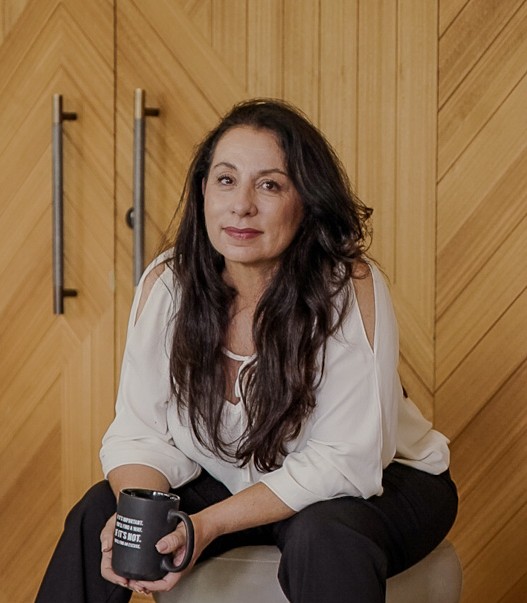
With over 15 years of corporate experience, I focus on cultivating thriving organisational cultures, dedicated to supporting teams, organisations, and individuals in achieving personal and professional growth and excellence and fostering psychological safety, while guiding leaders and teams through change. I specialise in team coaching, leadership development, employee experience, and organisational culture. I am certified as a foundation team coach, facilitator, and coach of the Four Stages of Psychological Safety™, emotional culture practitioner, and AQai Professional Level.
View partner profile →The Change Catalyst: Merging Structure and Adaptability for Success is a one-day masterclass that combines the ADKAR® change framework with the AQ® adaptability assessment. Delivered to 38 change leaders across the Dutch Caribbean on 30 October 2025, it moves leaders from a framework-first approach to a people-first one, using each participant's own AQ Me™ profile to tailor how they lead others through change.
ADKAR® structures the stages of change: Awareness, Desire, Knowledge, Ability and Reinforcement. AQ® measures each individual's adaptive capacity across Ability, Character and Environment. Used together, they let change leaders match the right framework stage to the specific person in front of them, instead of applying one approach uniformly to teams that adapt very differently.
Overall satisfaction reached 8.5 out of 10, 93% of respondents said their expectations were met or exceeded, and 100% said they would recommend the masterclass to a colleague. Participants left treating change as a human-capability question rather than a training problem.
It was co-delivered by Christina Sprock, Founder of Virtus Creates and an AQai® Certified Partner (Level 1 and 2), and Peggy Cecilia-Spong, MBA, Founder of The Change Creator, a Lean Six Sigma Master Black Belt and Prosci change practitioner.
AQ® measures adaptability, the capacity to navigate change, complexity and uncertainty, across three dimensions: Ability, Character and Environment. Unlike engagement surveys or personality tests, it measures what people can do when the ground shifts, not how they feel or who they are.
New to adaptability? AQ Essentials is a 90-minute micro-certification that equips HR, L&D and change leaders to put structure and adaptability to work in their own teams. Start with AQ Essentials.
Copyright adaptai Ltd. All rights reserved. AQ® and AQai® are registered trademarks of adaptai Ltd.


.png)
.png)

